Haeundae Beach
Haeundae Beach
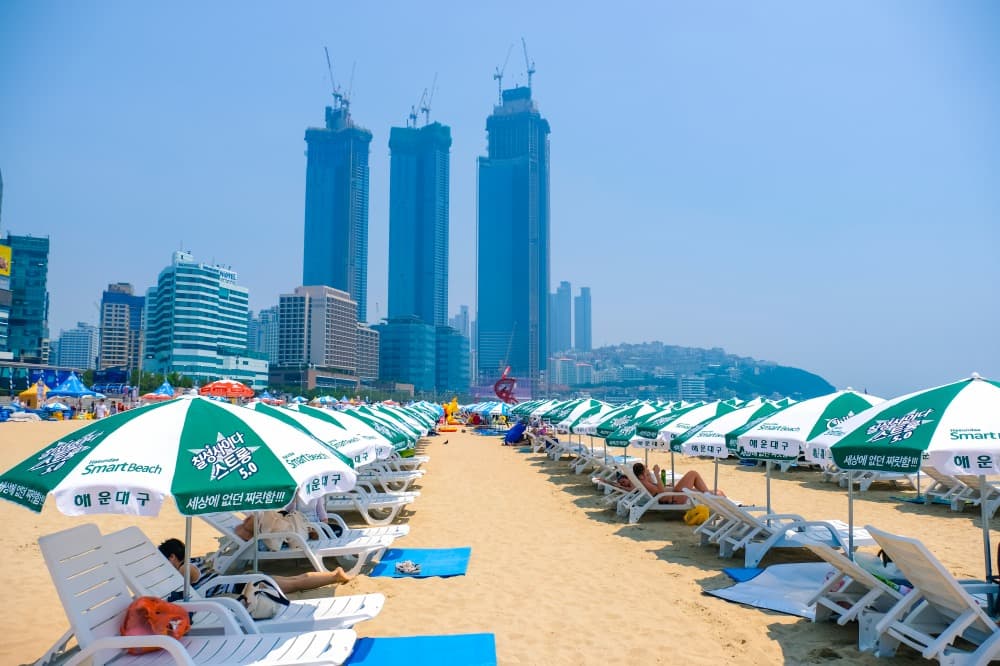
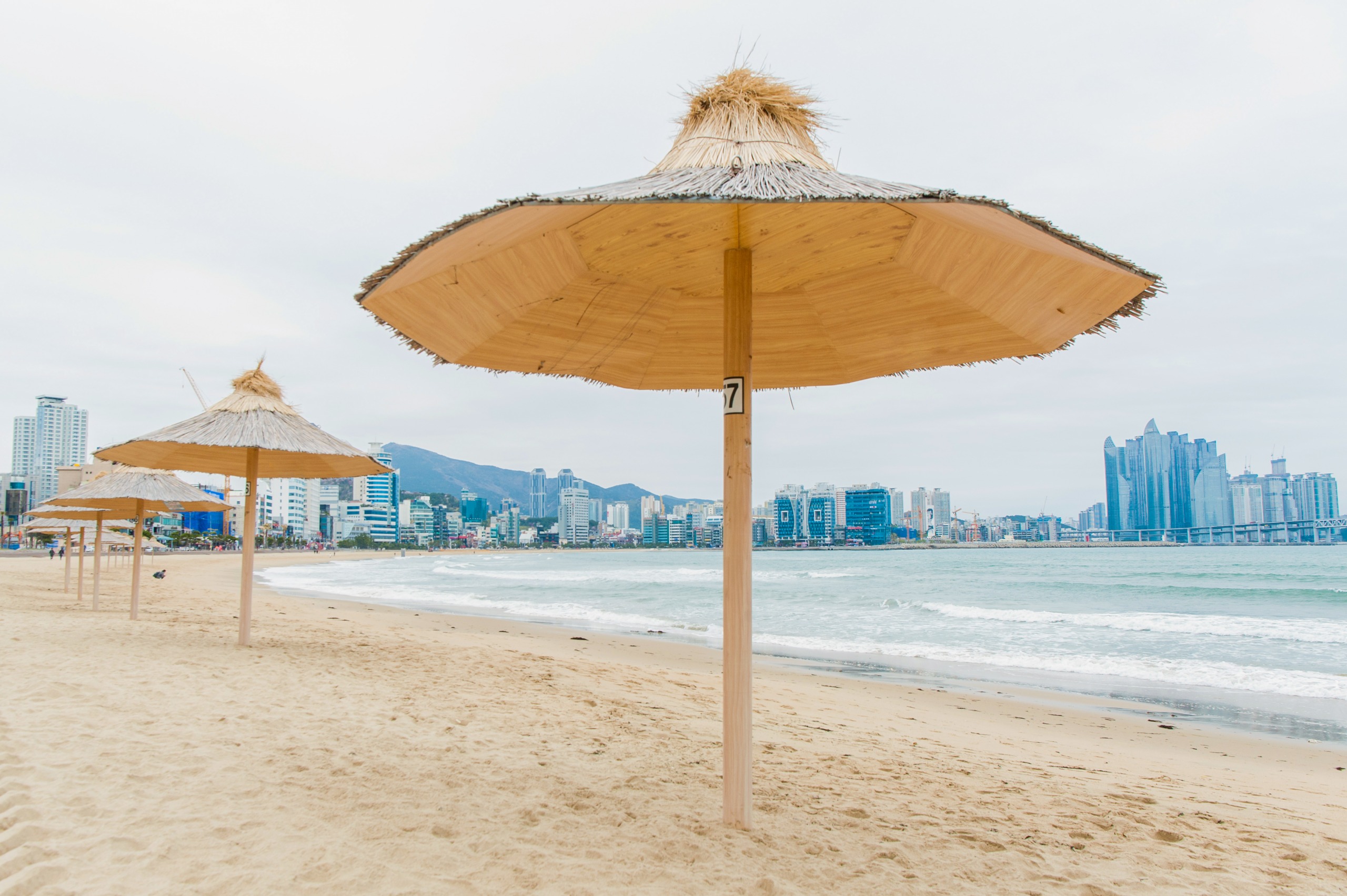
Busan's main urban beach, Haeundae stretches 1.5 km of sand, a promenade to Dongbaek Island, an aquarium and two major annual festivals.
Haeundae Beach extends for approximately 1.5 km along the eastern coast of Busan, with a width of 30 to 50 meters. It is one of the most frequented urban beaches in Corée du Sud, backed by a lively beach district, waterfront hotels, and Dongbaek Island at its western end.
Why visit Haeundae
Haeundae combines three functions rarely found on the same site: a large sandy beach conducive to summer swimming, a dense urban setting where restaurants, markets and hotels are concentrated, and a cultural environment marked by two major festivals. The promenade running along the sand to Dongbaek Island allows you to combine swimming, a wooded walk and views of Gwangan Bridge within a few hours.
The beach's maximum capacity is estimated at 120,000 people at peak summer: the site functions as much as a collective leisure space as it does a beach in the traditional sense.
A little history
The name Haeundae dates back to the 9th century. Poet Choi Chi-Won, a major figure of the Silla dynasty, is said to have named the site "Haeun" (海雲), literally "sea and clouds," after contemplating the shore. Tradition also attributes to him the construction of a pavilion at the top of Dongbaek Island, today developed as a public park at the western end of the beach. Several stelae and commemorative elements there still recall his passage.
Once a simple fishing beach, Haeundae underwent urbanization during the 20th century to become Busan's bathing and hotel hub, coupled with a business district hosting international meetings and cultural events.
What to see and do
The beach and its promenade
The beach is open year-round, but supervised swimming is concentrated during the summer season. The rest of the year, the sand welcomes walkers, joggers and temporary art installations. A dedicated promenade runs along the entire waterfront and extends to Dongbaek Island.
Dongbaek Island
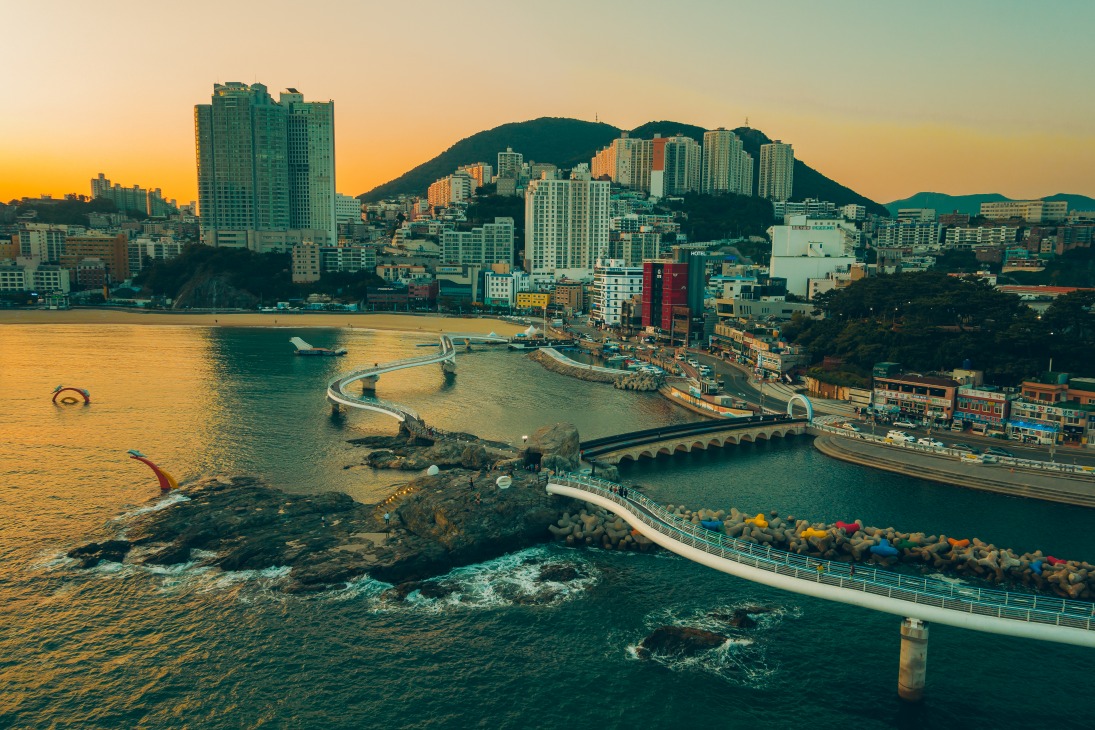
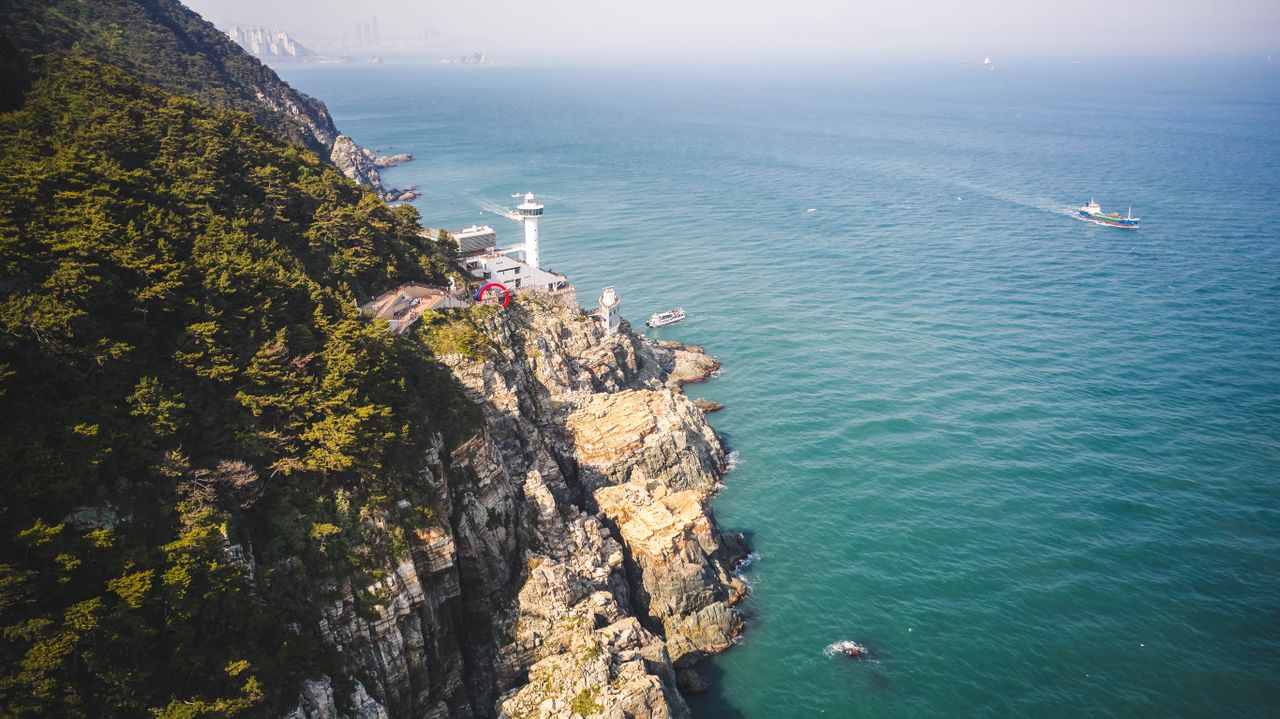
Connected to the beach by the coastal promenade, Dongbaek Island (actually a peninsula) offers a shaded trail, a lighthouse and the Nurimaru APEC House, a pavilion built for the 2005 APEC summit and used since for official meetings. Allow approximately 1 hour to walk around it.
Sea Life Busan Aquarium
Located in the basement at the end of the beach, Sea Life Busan Aquarium spreads over three levels and features Korean and tropical marine fauna, with a glass tunnel crossing the main tank. Allow 1.5 to 2 hours for your visit; paid admission.
Festivals
- Busan International Film Festival (BIFF): early October. One of Asia's major film festivals, featuring screenings, meetings and red carpets in the Haeundae district and neighboring Centum City.
- Haeundae Sand Festival: late May-early June. International sand sculpture competition set up directly on the beach, accompanied by free concerts and entertainment.
When to go
The swimming season runs roughly from early July to late August: water around 22-24°C, beach open to swimmers, seasonal services (parasol rental, life jackets, rescue stations) in place. This is also the busiest period, with saturated weekends.
May-June and September-October offer an interesting compromise: mild temperatures, fewer crowds, and coinciding with the two major festivals. Winter remains pleasant for strolling, but windy and too cold for swimming.
Practical information
- Free access to the beach year-round, 24/7.
- Permanent facilities: restrooms, showers, changing rooms, water fountains, benches and lighting along the waterfront.
- Seasonal services (summer): parasol and tent rental, life jackets, rescue team, summer police patrols.
- Parking: paid public and private parking nearby, few free spaces during peak season.
- Dining: numerous raw fish (hoe) restaurants, cafés and hotel chains on streets immediately behind the sand.
How to get there
By metro: Busan metro line 2 (green), Haeundae station, exits 3 or 5. The beach is then 5 to 10 minutes' walk via the shopping avenue descending to the sea.
By bus: several urban bus routes serve the Haeundae stop from downtown and Busan Station. Check current line numbers on Naver Map or Kakao Map apps, more reliable than printed lists.
By taxi: approximately 25-35 minutes from Busan Station depending on traffic, convenient option in groups or with luggage.
Nearby
- Gwangalli Beach: a few metro stops away, famous for its direct view of the illuminated Gwangan Bridge.
- Dongbaek Island and park: directly accessible from the western end of the beach.
- Centum City: neighboring commercial and cultural hub, where part of BIFF takes place.
- Jagalchi Fish Market: approximately 30 minutes by metro, for another facet of Busan.
Frequently asked questions
Häufig gestellte Fragen
Include Haeundae in your trip
Haeundae naturally fits into an itinerary combining Busan and the south of the country, alongside historic villages like Hahoe or Nagan, and natural sites like Hallasan on Jeju Island. To build a custom itinerary, consult our trips to Corée du Sud.
In der Nähe
Interesse an diesem Besuch?
Wir können ihn in Ihre persönliche Route aufnehmen.